
The Tree of Music is a guided journey through the genres, artists, recordings and cultural movements that shaped the sound of generations.

Created by Joseph Avramoglou, music analyst, radio producer and music professional with decades of experience in broadcasting, concert promotion and the recording industry, the series combines music history with carefully selected listening recommendations and practical guides designed to help readers discover the essential sounds, key artists and landmark recordings of each genre.

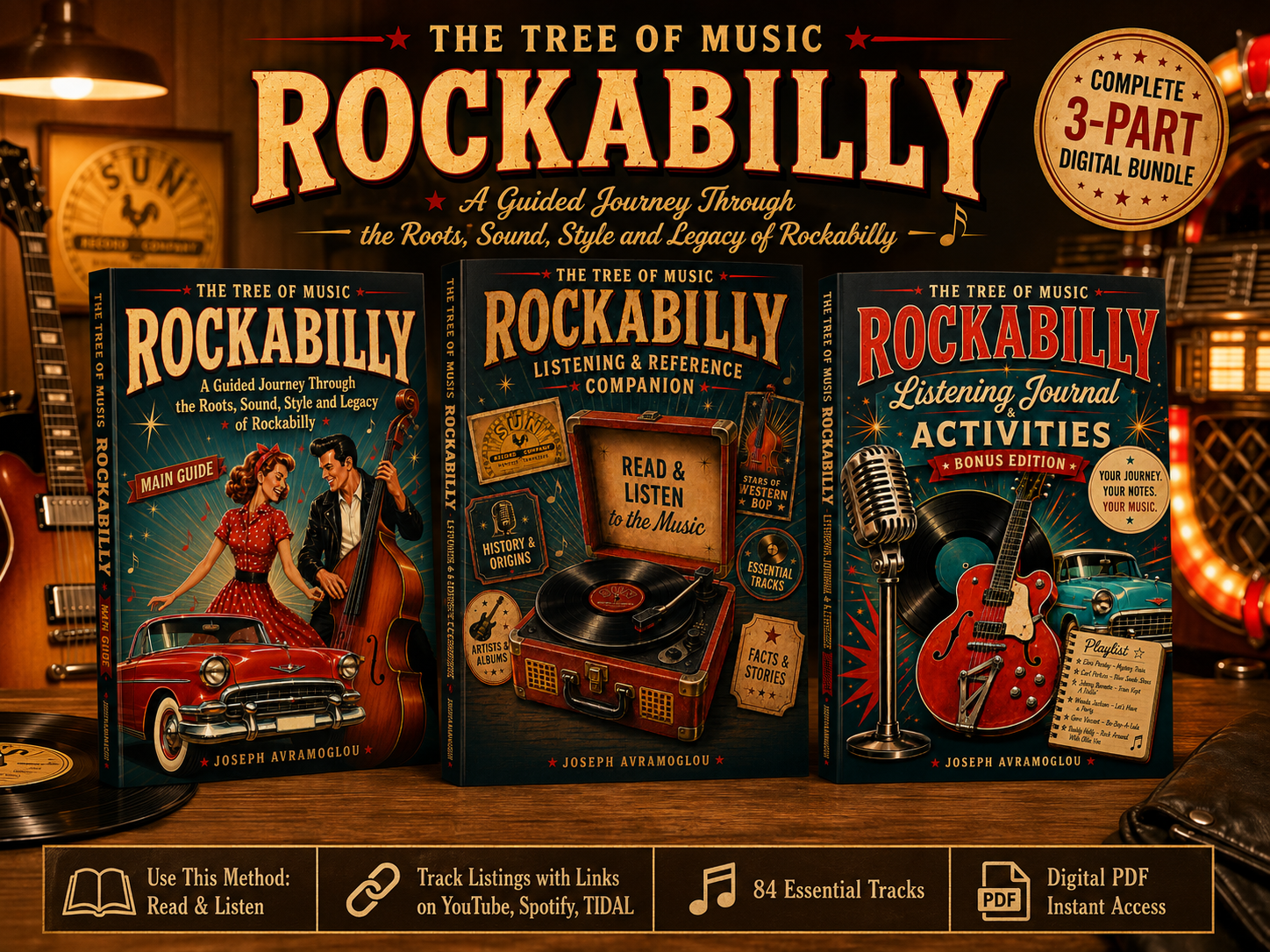
The journey begins with Rockabilly — one of the most exciting meeting points between country, rhythm & blues and early rock ’n’ roll. The first release is a complete 3-part digital bundle designed to introduce readers to the genre’s essential history, artists and recordings, while guiding them through the music they really need to hear.

Welcome to the Rockabilly Branch

Before rock ’n’ roll became a worldwide language, rockabilly gave it one of its most vivid early accents. The music emerged in the American South during the first half of the 1950s, when young performers began treating the boundaries between country, blues, rhythm and blues, gospel, western swing and boogie as suggestions rather than rules. Those traditions had lived beside one another for decades, often separated by race, radio formats and the commercial categories of the record business. Musicians, however, kept listening across the lines.What they created was fast, lean and immediately recognizable. A country song could acquire the pressure of rhythm and blues; a blues phrase could enter a country guitar break; an upright bass could provide both the low notes and the percussion. In a small studio, three or four musicians could sound far larger than the room around them. Rockabilly was never a single formula. Some recordings were driven by slap bass, others by drums or piano. Some singers sounded playful and nervous; others were dark, controlled or openly aggressive. The shared quality was the balance: country structure, blues expression and a rhythm strong enough to make the performance feel physical.The style also carried a new public image. Hair, clothing, guitars, cars and dance became part of the same statement. For many teenagers, the records offered more than entertainment: they suggested a way to look, move and belong to a generation that did not want to inherit every rule unchanged. Elvis Presley became the most famous figure in this story, but he is not the whole story. Carl Perkins, Gene Vincent, Eddie Cochran, Johnny Burnette, Charlie Feathers, Warren Smith, Wanda Jackson, Janis Martin, Lorrie Collins and many less familiar artists each revealed a different possibility within the music. Some became stars; others left behind only a handful of singles. The best of those records still sound startlingly present.The first commercial wave was brief. By the end of the 1950s, rock ’n’ roll had expanded, major artists had changed direction and the music industry had learned how to package youth culture more safely. Rockabilly moved away from the center of the charts, but it never vanished. Its guitar language traveled to Britain, its economy appealed to garage and punk musicians, and its rhythms returned through roots rock, neo-rockabilly and psychobilly.This book approaches that history through listening. The dates and biographies matter, but the recordings are the real evidence. As you move through the chapters, you will hear the bass become percussion, the electric guitar become a second voice and familiar songs change character when musicians shift the rhythm beneath them.No formal musical training is required. Curiosity is enough. Open one of the companion playlists, listen closely and allow the records to make the argument.Welcome to the Rockabilly branch of The Tree of Music.

Discover Your Sound

Testimonials That Inspire Trust

Read what our satisfied customers have to say about their experiences with our curated e-book bundles. These testimonials reflect the quality of our offerings and the impact they have on enhancing your musical journey.

What Our Clients Say

See feedback from satisfied customers

“The e-book bundle transformed my understanding of music history. The curated content was insightful, and the guided activities helped deepen my appreciation for different genres.”
Jane Doe | Music Educator
Educator
“I loved how engaging the e-books were! They provided a perfect blend of history and practical exercises that made learning enjoyable and effective.”
John Smith | Music Enthusiast
Enthusiast

Client Voices

Hear What Our Customers Are Saying

“I discovered my passion through these musical journeys. The e-books are insightful and have significantly enhanced my understanding of different genres.”
Jane Smith | Music Enthusiast
Student
“These guides have transformed the way I appreciate music. The combination of history and listening activities made for an unforgettable learning experience.”
John Doe | Educator
Teacher

Share Your Story with Us

We invite you to share your testimonials and experiences with our guided music journeys. Your feedback helps us improve our offerings and serve you better. Explore our curated e-book bundles that dive into the historical contexts of music genres, enriching your learning.

Join our community today and let us know how our resources impact your musical journey!

What Our Customers Say

Hear from our satisfied clients and their positive experiences.

"This e-book bundle really opened my eyes to the historical side of music. The guided activities made learning enjoyable and memorable!"

Sarah Johnson
Music Teacher | Academy of Arts
"The curated bundles have transformed my approach to music education. They provide a perfect mix of learning and enjoyment!"
Mark Thompson
Educator | City Music School
"I love how the e-books combine fascinating history with listening exercises. It made my lessons more engaging!"
Emily Carter
Music Blogger | The Soundwave

Certified Secure Payment

Satisfaction Guaranteed

Trusted by Music Experts